

Teething Survival Guide: From First Chew to First Steps
The moment your baby’s first tooth begins to appear is one of the biggest milestones of early life. It’s a sign of healthy growth – but it also marks the start of a sometimes challenging stage for both parents and babies. Every child experiences teething differently, but knowing what to expect (and how to help) can make the process much smoother.
At Sophie la girafe®, we’ve been helping parents navigate teething since 1961. With over sixty years of experience, we’ve seen it all – the drooling, the sleepless nights, and the countless chews. Here’s how to make teething more comfortable for your baby, from that very first chew to their first confident steps.
The Early Signs: When Teething Begins
Teething typically starts around six months, but it can begin as early as three months or as late as one year. The first teeth to appear are usually the lower front incisors, followed by the top ones. You might notice your baby becoming more unsettled, drooling more than usual, or chewing on anything they can get their hands on.
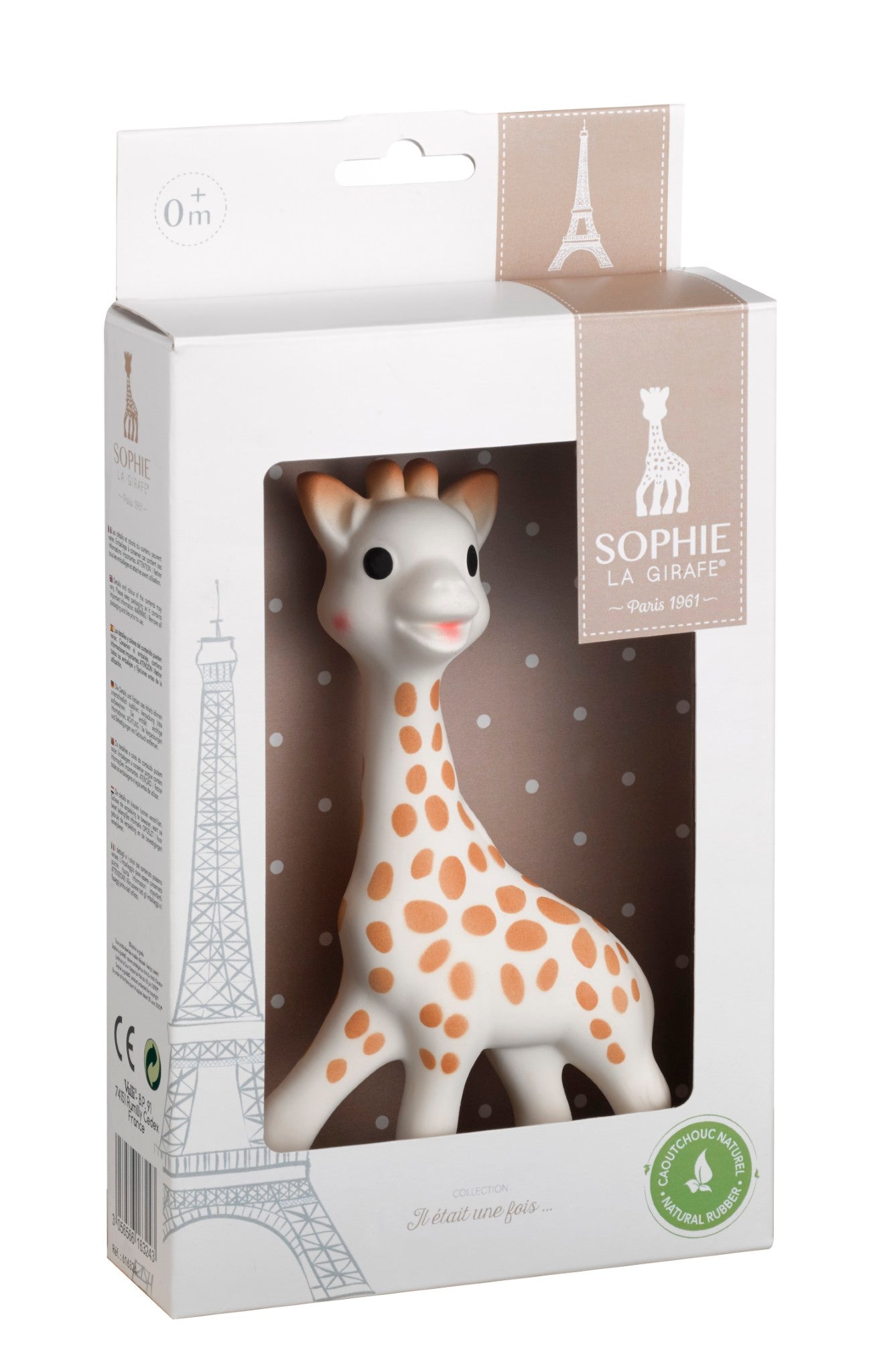
At this stage, your baby isn’t just soothing their gums – they’re exploring new sensations. Their mouth becomes their main tool for discovery. That’s why a teether like Sophie la girafe® is so effective. The soft natural rubber mimics the comforting feel of a parent’s skin, while its gentle resistance helps relieve pressure on sore gums.
Soothing Sore Gums Safely
The key to easing teething discomfort is providing something safe, clean and satisfying to chew on. Avoid giving your baby frozen or hard objects, as these can be too harsh on developing gums. Instead, choose a natural-rubber teether designed specifically for comfort.
Sophie’s long limbs and rounded ears make it easy for babies to reach every part of their mouth. Her lightweight design is perfect for little hands, and the gentle squeak keeps babies entertained while encouraging sensory engagement. It’s this combination of texture, sound and familiarity that makes Sophie a staple in so many nurseries around the world.
Keeping your baby hydrated also helps. Offer cool water and, if your baby has started solids, chilled fruit purées or soft vegetables. Rubbing a clean finger or soft cloth gently along the gums can provide quick relief too.
Creating Calm During the Tough Days
Some days will be more challenging than others. A teething baby might sleep less, eat less, and need more cuddles. Try to stay consistent with routines, but allow extra comfort and patience when needed. Babies pick up on stress, so staying calm helps them feel secure even when they’re uncomfortable.
You can also use teething as an opportunity for bonding. Offer extra skin-to-skin time, play soothing music, or take short walks together. The more relaxed your baby feels, the easier they’ll manage the temporary discomfort.
The Developmental Benefits of Teething Toys
Teething isn’t just about relieving discomfort – it’s a vital part of early development. Every chew strengthens the jaw muscles that will later support speech and chewing. Teething toys like Sophie encourage babies to explore texture and sound, helping develop hand-eye coordination and sensory awareness.
Because Sophie is made from natural rubber and painted with food-grade pigments, parents can be confident that every bite is safe. It’s one of the few teethers that actively supports both sensory and developmental growth, while remaining free from harmful chemicals.
From Teething to First Steps
As your baby’s first teeth come through, new milestones follow quickly – trying solid foods, babbling more, and eventually taking those first steps. Each stage brings new ways for your baby to explore the world, and their teether will often remain a source of comfort long after teething ends.
Sophie la girafe® has been part of that journey for generations. She’s not just a teether but a familiar friend who sees babies through some of their earliest challenges. When you look back on these months, you’ll remember them not just for the sleepless nights, but for the smiles, laughter and firsts that followed.
Teething is temporary, but the bond it creates is lasting. And with the right support, it can even become one of the most rewarding parts of early parenthood.
FAQs
When does teething usually start?
Most babies begin teething around six months, but it can vary. Some start earlier, while others may not get their first tooth until closer to their first birthday.
How can I tell if my baby is teething?
Common signs include drooling, red cheeks, irritability, difficulty sleeping, and a strong urge to chew. Some babies may also lose their appetite or develop mild gum swelling.
What makes Sophie la girafe® effective for teething?
Sophie is made from 100% natural rubber and painted with food-grade pigments. Her texture is soft yet firm enough to massage sore gums, and her design allows babies to grip and chew comfortably.
Can I chill Sophie to soothe my baby’s gums?
It’s best not to freeze Sophie, as extreme cold can damage the natural rubber. However, keeping her in a cool room or near a cool surface can help make her more soothing.
How should I clean Sophie la girafe®?
Wipe Sophie with a clean, damp cloth and mild soapy water. Avoid submerging her in water or using sterilising equipment, as this can affect the natural rubber and squeak.
Teething is one of the first real tests of patience and comfort for both baby and parent. With a little preparation – and a trusted companion like Sophie la girafe® – it becomes a stage filled with learning, connection and joy
